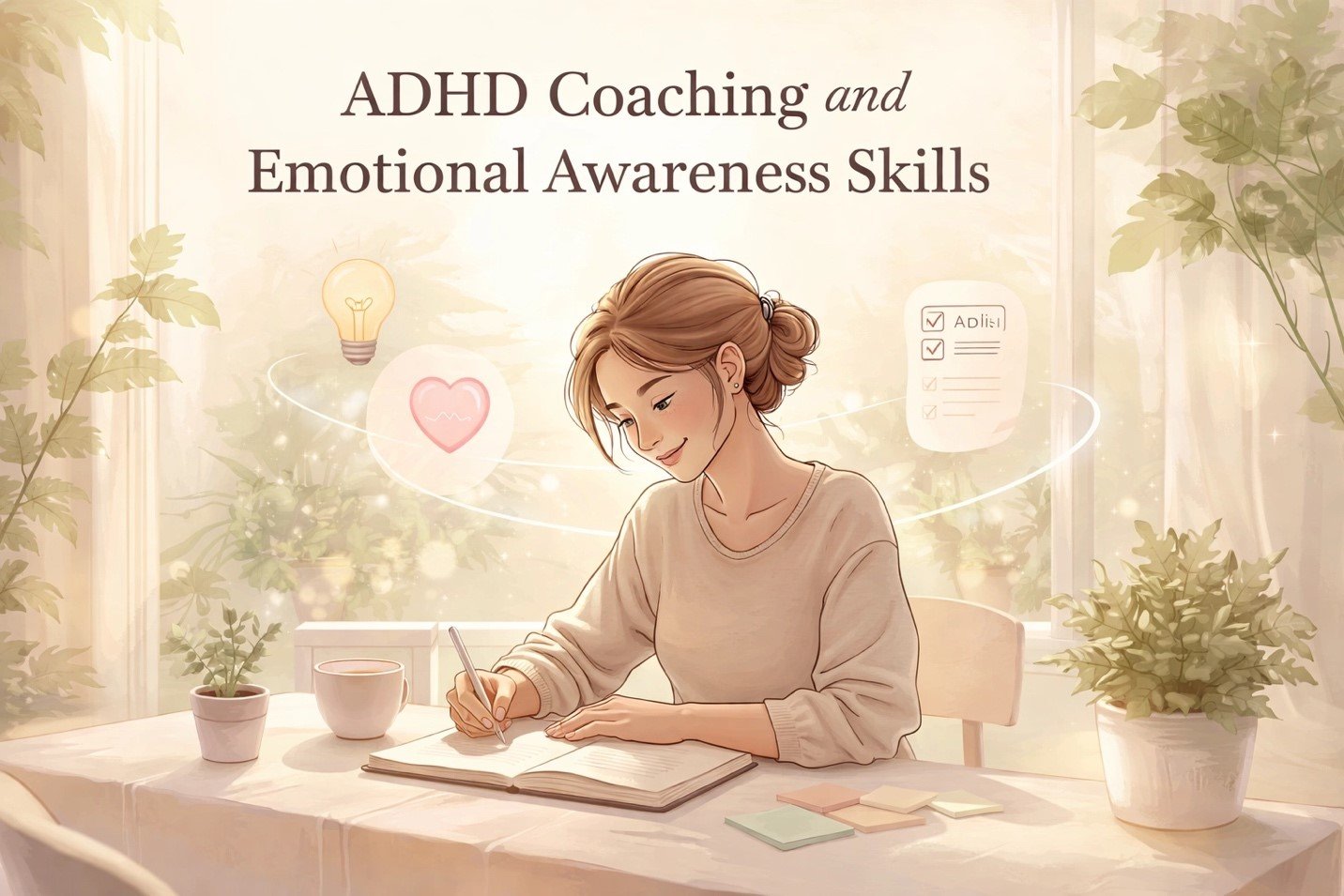
ADHD Coaching and Emotional Awareness Skills
Let’s talk about something that doesn’t get nearly enough airtime when we discuss ADHD: the emotions. The big, loud, sometimes overwhelming emotions that show up uninvited and stick around way longer than you’d like.
If you’ve ever felt like your feelings are cranked up to eleven while everyone else seems to be cruising at a comfortable five, you’re not alone. And no, you’re not “too sensitive” or “overreacting.” There’s actually a real reason your emotional world feels so intense.
Here at Heal and Thrive Psychotherapy and Coaching, we work with adults across Los Angeles and Orange County who are navigating this exact struggle. And honestly? Helping people understand and work with their emotions, not against them, is one of the most rewarding parts of ADHD coaching.
So grab your coffee (or your third coffee, no judgment here), and let’s dig into why emotional awareness matters so much for the ADHD brain.
The ADHD-Emotion Connection Nobody Warned You About
Here’s the thing. When most people think about ADHD, they picture someone who can’t sit still or loses their keys constantly. And sure, those things can be part of it. But what often gets left out of the conversation is how deeply ADHD affects your emotional life.
Research shows that emotional dysregulation is a core feature of ADHD for many people. Not a side effect. Not a character flaw. A legitimate part of how the ADHD brain is wired.
What does that look like in real life?
- Getting flooded with frustration over something “small”
- Feeling rejection so intensely it takes your breath away
- Cycling through emotions faster than you can name them
- Struggling to calm down once you’re upset
- Experiencing joy, excitement, or enthusiasm at levels that feel “too much” to others
Sound familiar? Yeah, I thought so.
Why Traditional Advice Falls Flat
You’ve probably heard all the standard advice. “Just calm down.” “Don’t let it bother you.” “Take a deep breath and move on.”
Cool. Super helpful. Except… not really.
Here’s the problem. That advice assumes your brain processes emotions the same way a neurotypical brain does. It doesn’t account for the fact that ADHD brains often experience emotions more intensely, more quickly, and with less built-in “buffer time” between feeling and reacting.
It’s like telling someone with glasses to “just see better.” The intention might be good, but it misses the whole point.
This is exactly why ADHD coaching takes a different approach. Instead of pretending your emotions should work differently, we start with understanding how they actually work for you. Then we build skills from there.
What Is Emotional Awareness, Anyway?
Before we can regulate emotions, we have to be aware of them. Sounds simple, right? But for a lot of adults with ADHD, this is actually the tricky part.
Emotional awareness means:
- Noticing when an emotion is showing up in your body
- Being able to name that emotion (even roughly)
- Understanding what might have triggered it
- Recognizing how it’s affecting your thoughts and behavior
Many of my clients in the Los Angeles and Orange County area come to coaching saying things like, “I don’t know why I blew up” or “I just suddenly felt terrible and couldn’t explain it.”
That’s not a failure. That’s a gap in emotional awareness that we can absolutely work on together.
How ADHD Coaching Builds Emotional Awareness
At Heal and Thrive Psychotherapy and Coaching, we use a bunch of different tools to help you get more in tune with your emotional landscape. Here are some of the big ones.
Body Check-Ins
Your body often knows you’re having an emotion before your brain catches up. That tight chest? Could be anxiety. The heat rising in your face? Might be anger or embarrassment. The heaviness in your limbs? Could be sadness or burnout.
We practice regular body check-ins: quick pauses throughout the day where you scan your body and notice what’s happening. Over time, this builds a stronger connection between physical sensations and emotional states.
Emotion Labeling
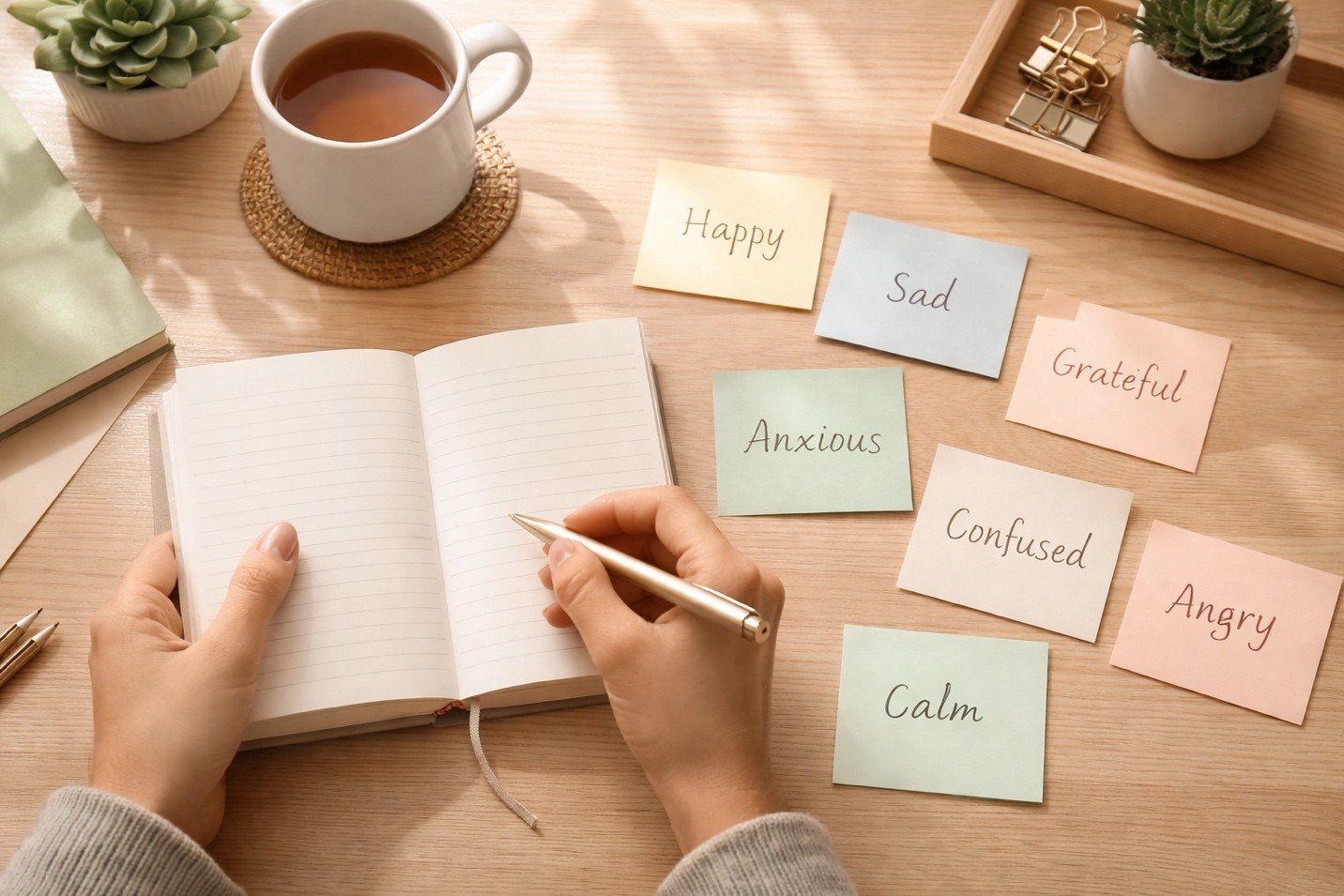
This one sounds almost too simple, but it’s powerful. Research shows that simply naming an emotion can reduce its intensity. It’s called “affect labeling,” and it basically helps your brain process the feeling instead of just reacting to it.
In coaching, we work on expanding your emotional vocabulary. Because “bad” and “stressed” can only take you so far. The more specific you can get: frustrated, disappointed, overwhelmed, anxious, resentful: the better you can understand what you actually need.
Mindfulness Practices (ADHD-Friendly Versions)
I know, I know. Mindfulness can feel like a dirty word when you have ADHD. Sitting still and clearing your mind? Not exactly our strong suit.
But here’s the good news. Mindfulness doesn’t have to look like sitting in silence for 30 minutes. For ADHD brains, it might look like:
- A one-minute breathing exercise before a meeting
- Noticing five things you can see, hear, or feel when you’re starting to spiral
- Taking three slow breaths while waiting for your coffee to brew
These tiny practices help you build the muscle of observing your thoughts and feelings without immediately reacting. And that pause? That’s where the magic happens.
Identifying Triggers
Once you start noticing your emotions more clearly, patterns emerge. Maybe you always feel irritable after back-to-back Zoom calls. Maybe rejection sensitive dysphoria hits hardest when you’re tired. Maybe certain people or situations consistently set off your frustration.
ADHD coaching helps you map out these triggers so you can anticipate them, prepare for them, and respond more intentionally.
From Awareness to Regulation: The Next Step
Awareness is the foundation. But the goal isn’t just to know you’re feeling something: it’s to be able to work with that feeling in a way that serves you.
Emotional regulation doesn’t mean suppressing emotions or pretending you don’t have them. It means having tools to manage the intensity so you can respond instead of react.
Here are some regulation strategies we often explore in coaching:
The Pause
Creating space between stimulus and response. This might be counting to ten, leaving the room for a minute, or even just taking a breath before you speak. It sounds basic because it is. But for ADHD brains that move fast, this pause can be genuinely life-changing.
Grounding Techniques
When emotions feel overwhelming, grounding brings you back to the present moment. This could be feeling your feet on the floor, holding something cold, or focusing on a specific object in the room. These techniques interrupt the emotional spiral and give your nervous system a chance to settle.
Reframing Negative Self-Talk
ADHD often comes with a harsh inner critic. “Why can’t you just get it together?” “Everyone else can handle this, what’s wrong with you?”
In coaching, we work on catching that negative self-talk and replacing it with something more realistic and compassionate. Not toxic positivity: just honesty without the cruelty.
If you’re curious about more strategies for emotional regulation, check out our post on how ADHD coaching supports emotional regulation skills.
Real Talk: This Takes Practice

I want to be honest with you. Building emotional awareness and regulation skills isn’t an overnight thing. It takes practice, patience, and a willingness to mess up sometimes.
You’re going to have moments where you react before you can pause. You’re going to have days where naming your emotions feels impossible. That’s okay. That’s part of the process.
What matters is that you keep showing up. And having support: someone in your corner who gets the ADHD brain: makes a huge difference.
Why Coaching (Not Just Therapy or Medication)
Therapy is valuable. Medication can be helpful for many people. But ADHD coaching fills a unique gap.
Coaching is action-oriented and skill-focused. It’s about the practical, day-to-day strategies that help you function better in your actual life. We work on real situations you’re facing right now and build tools you can use immediately.
At Heal and Thrive Psychotherapy and Coaching, we often combine coaching with therapy for a more complete approach. Because sometimes you need to process the deeper stuff and build practical skills at the same time.
If you’re in Los Angeles or Orange County and you’ve been feeling stuck, overwhelmed, or frustrated with your emotional life, ADHD coaching might be exactly what you need.
Want to learn more about how coaching helps with overwhelm? Read our guide on how ADHD coaching helps reduce overwhelm and decision fatigue.
The Ripple Effect of Emotional Awareness
Here’s what I’ve seen again and again with clients. When emotional awareness improves, everything else starts to shift too.
Relationships get better because you can communicate what you’re feeling instead of exploding or shutting down. Work gets easier because you can manage frustration and stay focused even when things go sideways. Self-esteem improves because you stop beating yourself up for having big emotions.
You start to trust yourself more. And that trust? It’s everything.

You Deserve Support That Actually Gets It
Living with ADHD in a world built for neurotypical brains is hard. Feeling like your emotions are “too much” on top of everything else? Even harder.
But you don’t have to figure this out alone. You don’t have to keep white-knuckling through life, hoping you’ll eventually learn to control yourself.
There’s another way. A way that honors how your brain actually works and builds skills that fit your life.
At Heal and Thrive Psychotherapy and Coaching, we’re here to help you develop the emotional awareness and regulation skills that make daily life feel more manageable. We serve adults across Southern California, including Los Angeles and Orange County, both in-person and online.
Ready to stop fighting your emotions and start working with them? Reach out to us at Heal and Thrive and let’s talk about how ADHD coaching can help you feel more grounded, more confident, and more like yourself.
You’ve got this. And we’ve got you.