
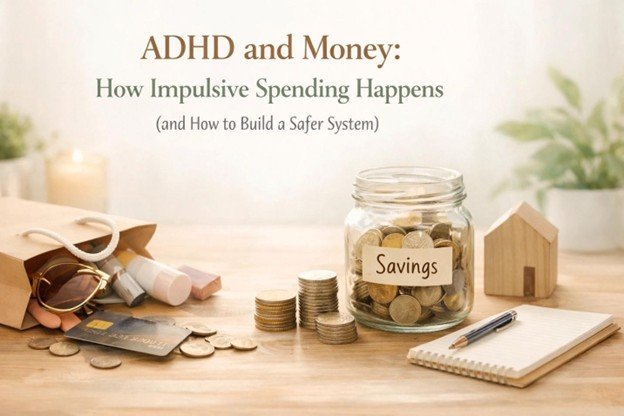
Let me tell you about the time I bought a $200 succulent collection at 11 PM on a Tuesday because my brain decided that right now was the only time that mattered.
I wasn’t trying to be irresponsible. I wasn’t “bad with money.” My ADHD brain was just doing what ADHD brains do, chasing the dopamine wherever it could find it. And friend, at midnight, scrolling through tiny plants felt like the best decision in the world.
If you’re reading this, I’m guessing you’ve been there too. Maybe it’s online shopping at 2 AM. Maybe it’s the Target run that was supposed to be “just milk” but turned into $150 worth of organizational bins you’ll never use. Maybe it’s the subscription services you forgot you signed up for, quietly draining your account every month.
ADHD impulsive spending isn’t about being careless or lazy. It’s about how your brain is wired, and why traditional budgeting advice usually makes things worse, not better.
Let’s talk about what’s really happening in your brain, why you’re not broken, and how to build a system that actually works with your ADHD instead of against it.
Your Brain on Dopamine (and Why Shopping Feels So Good)
Here’s the thing most financial advice gets wrong: ADHD impulsive spending isn’t a character flaw. It’s neurological.
Adults with ADHD are about four times more likely to make frequent impulse purchases than people without ADHD. That’s not because we lack discipline. It’s because our brains process rewards differently.
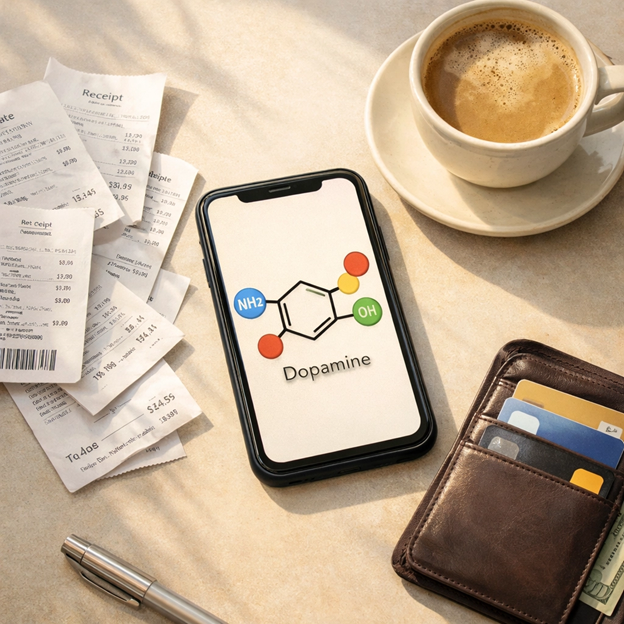
The ADHD brain has altered dopamine pathways. Dopamine is that feel-good chemical that helps with motivation, pleasure, and reward. Your brain doesn’t produce or use dopamine the same way a neurotypical brain does. So you’re constantly, unconsciously seeking activities that give you that dopamine hit.
And guess what gives you an instant dopamine rush? Buying stuff.
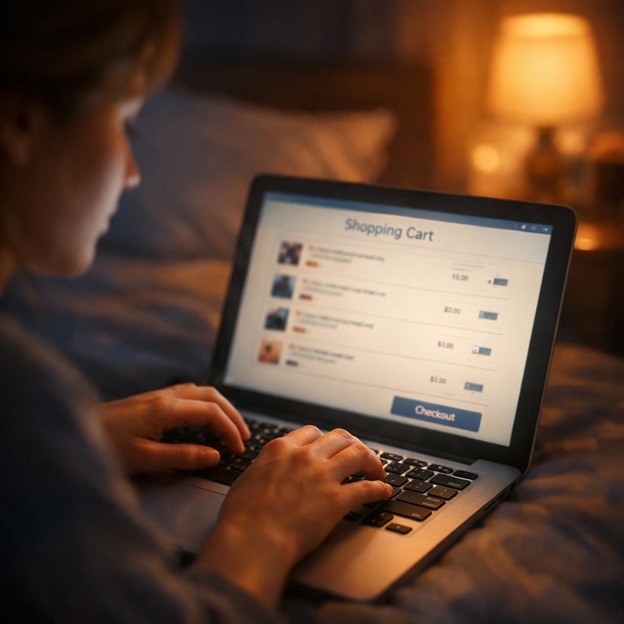
Dopamine spending is real. When you click “buy now,” your brain lights up. It feels good. It feels urgent. It feels necessary. That’s not weakness, that’s your brain trying to regulate itself the only way it knows how in that moment.
The problem is that the dopamine hit fades fast. Then you’re left with buyer’s remorse, a lighter bank account, and packages you don’t remember ordering showing up at your door.
Why Your Executive Function Isn’t Helping
Here’s where it gets extra tricky. ADHD doesn’t just affect dopamine. It also messes with your executive functions, the mental skills you need for planning, organizing, remembering things, and controlling impulses.
This creates a perfect storm for impulsive spending:
Time blindness means you can’t really feel the future consequences of buying something right now. Your ADHD brain genuinely can’t connect “I buy this today” with “I won’t have rent money in two weeks.” The future feels abstract and far away. Right now feels urgent and real.
Working memory issues mean you might forget you already bought something similar. Or you forget to cancel that free trial before it turns into a $40 monthly charge.
Decision fatigue means that after a long day of forcing your brain to focus, making decisions, and regulating yourself, you have zero capacity left to say no to that late-night shopping impulse.
Emotional dysregulation means when you’re stressed, anxious, sad, or bored, your brain reaches for quick relief. And shopping? Shopping feels like relief.
None of this is your fault. But it does explain why the standard “just make a budget and stick to it” advice feels impossible.
The Real Cost (It’s Not Just Money)
Let’s be real about what ADHD impulsive spending actually costs you.
Research shows that adults with ADHD carry over $3,000 more in credit card debt compared to people without ADHD. Up to 21% of adults with ADHD develop compulsive buying behaviors. But the financial hit isn’t even the worst part.
The emotional cost is brutal:
- Guilt and shame every time you look at your bank account
- Anxiety about bills, debt, and whether you can afford basic needs
- Clutter from impulse purchases you didn’t need and won’t use
- Relationship stress if a partner is frustrated by the spending
- Self-worth issues because you feel like you “should” be able to control this
You start avoiding looking at your finances altogether. You feel like you’re failing at being an adult. You wonder why everyone else seems to have this figured out.
Here’s what I need you to hear: You’re not failing. The system you’re trying to use was designed for brains that work differently than yours.
Why Traditional Budgeting Fails ADHD Brains
Most budgeting advice assumes you have consistent executive function, stable impulse control, and the ability to track tiny details over time.
If you have ADHD, you probably don’t have any of those things reliably.
Traditional budgeting requires:
- Tracking every purchase (executive function + working memory)
- Planning ahead (time perception + future thinking)
- Saying no to immediate wants (impulse control + delayed gratification)
- Remembering to check your budget (working memory + consistency)
- Feeling motivated by long-term goals (dopamine regulation)
No wonder it doesn’t work.
You try tracking expenses in an app for three days, then forget it exists. You make a detailed budget, then break it within 48 hours and feel like a failure. You promise yourself you’ll stop spending, then order something on Amazon at 1 AM because your brain was bored and needed stimulation.
The problem isn’t you. The problem is that the advice doesn’t match your neurology.
Building Your ADHD-Friendly Money System
Okay, here’s the good news: You can reduce impulsive spending without relying on willpower or shame. You just need to build systems that work with your ADHD brain instead of against it.
The key is creating what I call “speed bumps”, small barriers that give your ADHD brain a chance to pause between impulse and action.
Speed Bump #1: Kill the One-Click Everything
The easier it is to spend money, the more you’ll spend. So make it harder.
Remove saved payment info from your favorite shopping sites. Delete your credit card numbers from Amazon, Target, and anywhere else you impulse shop. Yes, it’s annoying to re-enter them. That’s the point.
Turn off one-click purchasing. Every extra click is a chance for your brain to catch up with your impulse.
Delete shopping apps from your phone. If you have to open a browser and type in the website, that’s a speed bump. It creates just enough friction to interrupt the impulsive autopilot.
Unsubscribe from marketing emails. You can’t be tempted by a sale if you don’t know it’s happening. Be ruthless. If a brand is triggering your dopamine spending, cut the connection.
Speed Bump #2: The 24-Hour Rule (Modified for ADHD)
Traditional advice says “wait 24 hours before buying anything.” But with ADHD time blindness, 24 hours feels like forever, and you’ll either forget completely or the urgency will feel even more intense.
Instead, try this: Put it in your cart and walk away for just 2 hours.
Set a timer. Do something else. Often, the dopamine urgency will fade, and you’ll realize you don’t actually want or need the item. If you still want it after 2 hours, at least it was a more conscious choice.
For bigger purchases, use your phone’s reminder system. Take a screenshot of what you want to buy and set a reminder for tomorrow. Your future self gets to make the decision instead of your impulse brain.

Speed Bump #3: The Cash Envelope System (Digital Version)
Here’s a system that actually works with ADHD brains: separate bank accounts for different purposes.
Most banks let you open multiple accounts for free. Create these categories:
- Bills & Necessities (rent, utilities, groceries: untouchable)
- Safe Spending Money (your “fun money” that you can blow without guilt)
- Savings (out of sight, harder to access)
When your paycheck hits, automatically split it between these accounts. The key is that your Safe Spending Money account is truly guilt-free. You can dopamine-spend from this account without financial consequences because it’s already budgeted for.
This removes the shame and gives your ADHD brain a safe outlet.
Speed Bump #4: Automate Everything You Can
ADHD budgeting help often comes down to one word: automation.
You’re not going to remember to transfer money to savings. You’re not going to consistently pay bills on time if you have to manually do it. Remove the need for executive function wherever possible.
Set up automatic bill pay for everything that’s the same amount each month. One less thing to remember.
Automate savings transfers. If $50 automatically moves to savings the day after payday, you never see it, so you don’t miss it.
Use subscription auditing tools. Apps like Truebill or Rocket Money will find subscriptions you forgot about and help you cancel them. Let technology do the executive functioning for you.
Speed Bump #5: Address the Emotional Trigger
This is the part most financial advice skips entirely, but it’s crucial for ADHD brains.
Impulsive spending is often emotional regulation in disguise. You’re not shopping because you need things. You’re shopping because you’re anxious, bored, stressed, understimulated, or overwhelmed.
Start noticing when you’re most likely to spend impulsively. Is it late at night when you’re tired? After stressful work days? When you’re feeling lonely or bored?
Once you identify the pattern, you can create alternative dopamine sources that don’t cost money:
- Boredom? Keep a list of free dopamine hits on your phone (favorite YouTube channels, video games you already own, calling a friend, going for a walk with music)
- Stress? Movement, breathing exercises, or even just stepping outside for five minutes
- Understimulation? Creative activities, puzzles, or reorganizing something you already own
- Loneliness? Text someone, join an online community, listen to a podcast that feels like conversation
The goal isn’t to never spend money for pleasure. The goal is to have options that aren’t just shopping.
When to Get Professional Support
Sometimes ADHD impulsive spending crosses into compulsive territory, where it’s not just occasional impulse buys: it’s a cycle that feels impossible to break.
If you’re experiencing:
- Spending despite serious financial consequences
- Lying to others about your spending
- Shopping to cope with intense emotions and nothing else helps
- Feeling out of control with money despite multiple attempts to change
It might be time for additional support. ADHD coaching can help you build personalized systems that work with your specific brain and triggers. At Heal and Thrive Therapy and Coaching, we work with adults navigating the real-world impacts of ADHD, including financial challenges.
ADHD coaching gives you accountability, structure, and strategies tailored to how your brain actually works: not how it “should” work.

You’re Not Broken: Your System Is
Here’s what I want you to take away from this: ADHD impulsive spending isn’t a moral failing. It’s a neurological reality that requires a different approach.
You don’t need more willpower. You need better systems.
You don’t need to “just be more responsible.” You need speed bumps that work with your dopamine-seeking, time-blind, executive-function-challenged brain.
You don’t need shame. You need compassion and practical tools.
Start with one speed bump. Just one. Maybe it’s deleting the Amazon app today. Maybe it’s setting up that separate “fun money” account. Maybe it’s starting to notice what emotional state triggers your spending.
Small changes in your system create space for your brain to make different choices.
And if you’re tired of fighting this alone? We’re here. Heal and Thrive Therapy and Coaching specializes in helping adults with ADHD build sustainable systems that actually work. Reach out: you don’t have to figure this out by yourself.
Your ADHD brain isn’t broken. It just needs the right infrastructure.
And that succulent collection I bought at 11 PM? Half of them died because I forgot to water them. But I learned something important from that expensive mistake: My brain needs guardrails, not guilt.
Build your guardrails. Be kind to yourself. And remember that progress isn’t perfection: it’s just making it a little bit harder for 11 PM You to make decisions that 8 AM You will regret.
You’ve got this. 🌱💰