
ADHD and Alcohol: How They're Connected and When to Get Help
Explore the connection between ADHD and alcohol, how drinking can affect symptoms and medications, and when to seek professional support.
Educational article · Publication date to be set in WordPress · Clinical review required before publishing
Quick Answer
ADHD and alcohol use disorder can occur together more often than would be expected by chance. Shared risk factors, difficulties with impulse control, and using alcohol to cope with distress may contribute for some individuals. However, ADHD does not automatically lead to problematic drinking, and alcohol does not treat ADHD. If drinking feels hard to control or affects your health, relationships, or responsibilities, a qualified professional can help assess what is happening.
Table of Contents
Living with ADHD can require considerable effort to manage distractions, emotions, and everyday responsibilities. For some adults, alcohol becomes a way to unwind, feel more comfortable socially, or temporarily quiet an overwhelmed mind.
But the relationship between ADHD and alcohol is more complicated than feeling relaxed after a drink. Research links ADHD with a higher likelihood of alcohol use disorder, while alcohol itself can make attention, sleep, judgment, and emotional regulation more difficult. Understanding the connection can help you notice patterns without assuming that a diagnosis determines your future.
Is There a Connection Between ADHD and Alcohol?
Yes, but the relationship is not simple or inevitable. ADHD is a neurodevelopmental condition involving ongoing patterns of inattention and/or hyperactivity-impulsivity. Alcohol use disorder (AUD) is a medical condition involving difficulty controlling alcohol use despite negative consequences. Someone can have either condition, both conditions, or neither.
The National Institute on Alcohol Abuse and Alcoholism (NIAAA) identifies ADHD as a condition that commonly co-occurs with AUD. Researchers have also identified shared genetic and environmental influences. Impulsivity and problems with attention may contribute to some risky situations, but no single symptom explains why an individual drinks.
Having ADHD does not mean someone has an addiction. Likewise, problems concentrating after drinking do not establish an ADHD diagnosis. An evaluation considers when symptoms began, drinking patterns, and other mental health concerns.
A more useful question is, “How might ADHD and alcohol affect this person’s daily life?”
Why Might ADHD and Alcohol Be a Complicated Combination?
Several factors may influence drinking behavior, and none applies equally to everyone.
Impulsivity and decisions in the moment
An adult may set a limit before going out but struggle to pause and reconsider once a social evening is underway. Impulsivity associated with ADHD can make delayed consequences feel less immediate than the rewards available right now. Alcohol can further impair judgment, making a planned limit harder to follow.
Emotional overload and coping
Work deadlines, unfinished tasks, relationship tension, and the effort of staying organized may leave some people exhausted. Alcohol might seem like a quick way to disconnect. The temporary relief can make the habit appealing, even if it creates additional stress the next morning. This is sometimes called self-medication, although it should not be assumed to describe every person with ADHD.
Social situations and expectations
Some adults drink because it helps them feel less self-conscious at gatherings. Others encounter settings where drinking is simply expected. Noticing whether drinking relates to anxiety, routine, or pressure can be revealing.
Other mental health conditions
Anxiety, depression, trauma-related difficulties, and sleep disorders may coexist with ADHD. These conditions can influence alcohol use independently. A good assessment looks at the whole picture rather than attributing every challenge to attention or impulse control.
Can Alcohol Make ADHD Symptoms Worse?
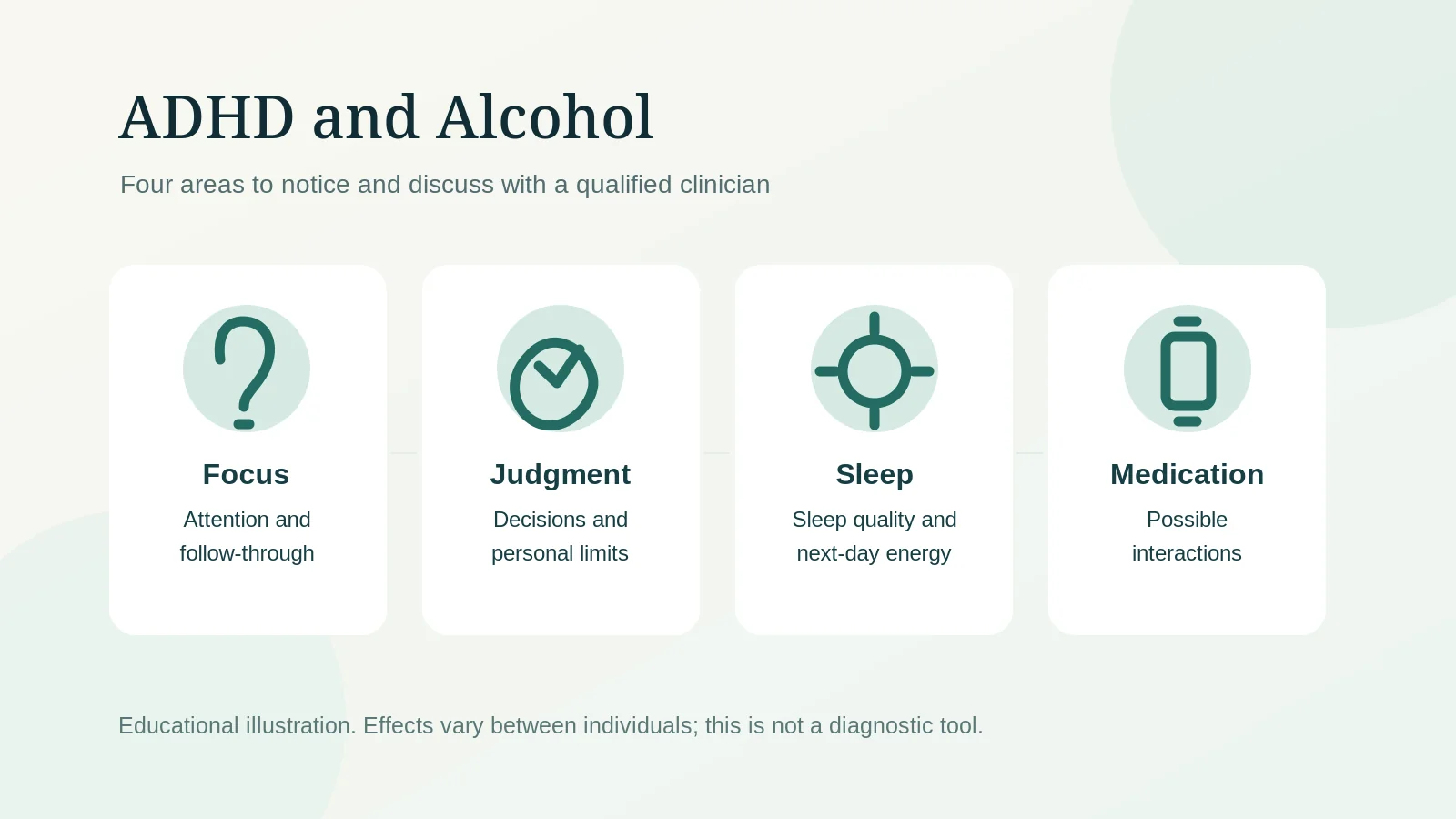
Understanding ADHD and alcohol also means looking at how alcohol changes brain function. Depending on the amount consumed and individual circumstances, it can impair attention, coordination, decision-making, and emotional control. For someone already managing ADHD symptoms, those effects may be particularly disruptive.
Sleep is another important factor. A drink may initially make someone feel sleepy, yet alcohol can interfere with healthy sleep patterns. The next day, poor sleep may make planning, frustration tolerance, and concentration harder.
| What drinking may feel like initially | What may happen afterward |
|---|---|
| Feeling less tense | Reduced judgment or impulse control |
| Feeling more comfortable socially | Difficulty noticing personal limits |
| Feeling sleepy | Disrupted sleep and next-day fatigue |
| Escaping stressful thoughts temporarily | More difficulty managing the original stressors |
These are possibilities, not predictions. Alcohol-related problems can also resemble ADHD symptoms. Tell a clinician about both your ADHD history and drinking pattern.
Notice what happens before, during, and after drinking. Patterns in sleep, missed commitments, conflicts, or anxiety may be more informative than one experience.
ADHD and Alcohol: What About Medication?
Mixing alcohol with prescription medication is an important safety question. Potential interactions depend on the exact medicine, dose, timing, medical history, and drinking behavior. It is not possible to give a safe universal rule for every ADHD prescription.
NIAAA lists potential alcohol interactions for medications used to treat ADHD, including methylphenidate, amphetamine-based stimulants, and atomoxetine. Depending on the drug, concerns may include impaired concentration, cardiovascular effects, or liver-related risks.
If you take ADHD medication, ask your prescriber or pharmacist whether drinking alcohol is safe with your specific prescription. Mention other medicines you take, including treatments for anxiety, depression, or sleep problems. Do not skip, adjust, or stop ADHD medication on your own to accommodate drinking.
Be especially cautious about using a stimulant medication to feel more alert while drinking. Feeling awake is not the same as having unimpaired judgment or coordination. If you notice chest pain, fainting, severe confusion, or other serious symptoms, seek urgent medical assessment.
Medication advice should always be individualized.
ADHD and Alcohol: When Is Drinking Becoming a Problem?
When discussing ADHD and alcohol, it helps to distinguish noticing changes in symptoms from meeting the criteria for alcohol use disorder. Only a qualified healthcare professional can determine whether AUD is present and how severe it may be.
Still, certain patterns are good reasons to ask for help. Consider whether you have:
- Drunk more, or for longer, than you intended.
- Tried to cut back but found it difficult.
- Spent considerable time drinking or recovering afterward.
- Continued drinking even when it affected work, relationships, or health.
- Felt strong urges to drink, especially when stressed.
- Needed increasing amounts to get the effect you expected.
- Experienced shakiness, sweating, nausea, or other possible withdrawal symptoms when alcohol wears off.
One experience does not automatically mean you have AUD. These signs can, however, justify a confidential conversation with a primary care clinician or addiction specialist. There is no requirement to reach a crisis before asking questions.
Clinicians should consider whether attention problems predated drinking so neither condition is overlooked.
When Is Urgent Medical Help Needed?
Alcohol withdrawal can be dangerous. If you have been drinking heavily for a prolonged period, suddenly stopping may cause serious symptoms, including seizures. Speak with a medical professional before attempting to stop without support if physical dependence is possible.
Seek emergency help for seizures, severe confusion, difficulty breathing, loss of consciousness, or suspected alcohol poisoning. In the United States, call 911 for a medical emergency.
If you are experiencing an emotional or substance-use crisis, you can call or text 988 for immediate crisis support in the United States. For treatment information and referrals, SAMHSA’s National Helpline is 1-800-662-HELP (4357).
Recognizing risks related to ADHD and alcohol is important, but avoiding a dangerous do-it-yourself withdrawal attempt is even more important.
What Support Helps With ADHD and Alcohol Concerns?
When ADHD and problematic drinking coexist, support should address both sets of concerns. NIAAA notes that coordinated care is often valuable because treating psychiatric symptoms alone may not adequately address alcohol use disorder.
A professional assessment
A clinician can ask about drinking, medication, sleep, mental health, and the timing of ADHD symptoms. They can also identify whether medical withdrawal management or specialized addiction care is needed. The resulting plan should match the person’s actual needs, not simply a website checklist.
Evidence-based behavioral treatment
Treatments for AUD can include cognitive behavioral therapy (CBT), motivational enhancement approaches, and other structured behavioral therapies. They can help people recognize situations that trigger drinking, build alternative coping skills, and plan how to respond to setbacks. Individual, family, and group approaches may be appropriate depending on the case.
Medication when appropriate
In the United States, medications approved for AUD include naltrexone, acamprosate, and disulfiram. They have different purposes and medical considerations. A licensed prescriber can discuss whether medication is appropriate; it is not a decision to make from an article alone.
Support for everyday ADHD challenges
ADHD-related planning and organization difficulties may continue even when someone receives appropriate alcohol treatment. Some people benefit from practical systems for scheduling, reminders, routines, and accountability. A practical starting point is building a daily routine that works for ADHD brains, alongside support from qualified professionals when needed.
ADHD coaching is not a treatment for alcohol use disorder. It does not replace a medical evaluation, addiction therapy, or medically supervised withdrawal. If coaching is useful, it should complement—not substitute for—care from qualified professionals when alcohol-related problems are present.
Priorities vary: medical safety may come first, followed by coordinated mental health care and practical supports.
Practical First Steps for ADHD and Alcohol Concerns
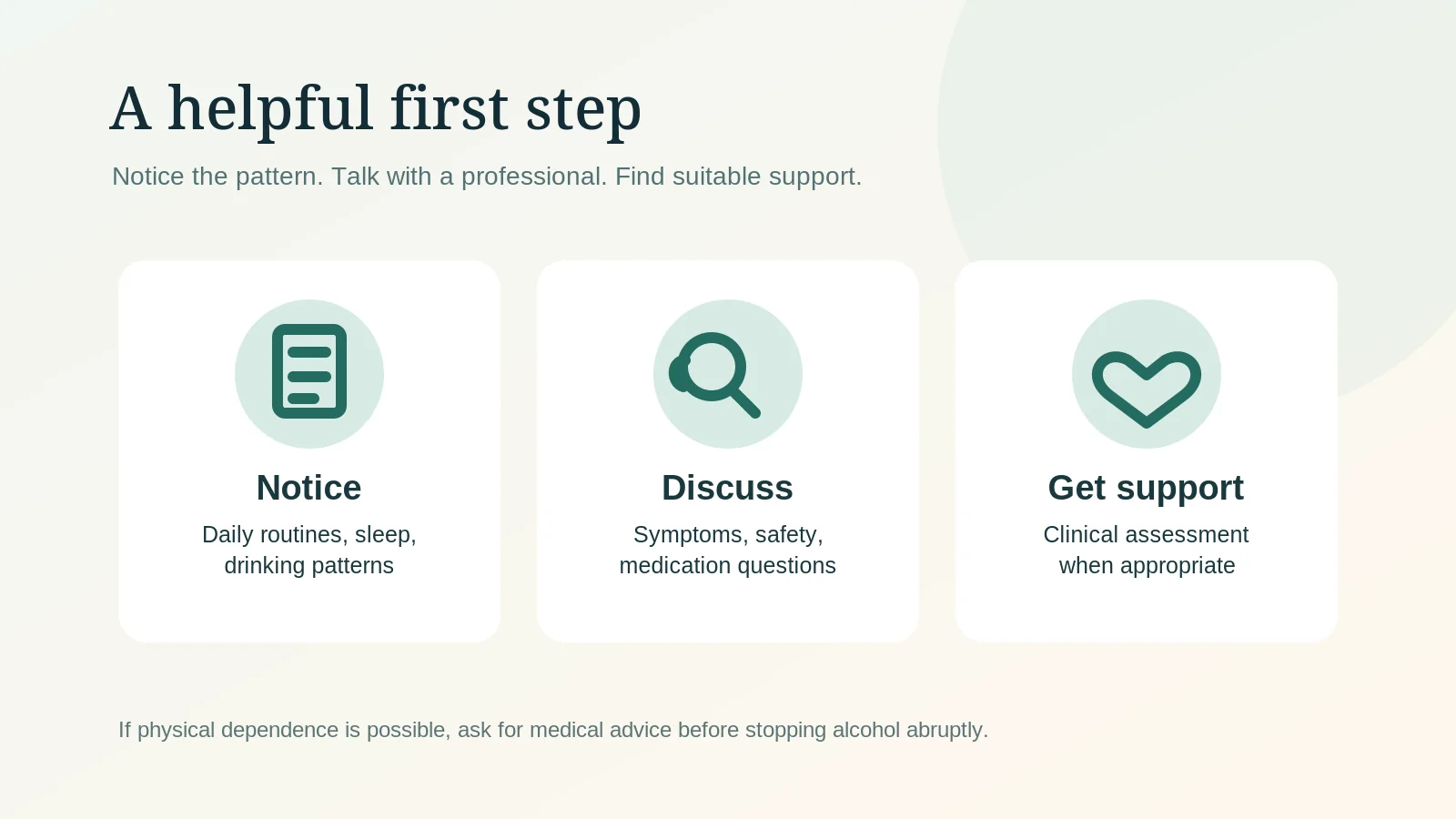
Talking about ADHD and alcohol may feel uncomfortable, especially if you have already tried changing a habit without success. You can begin with a few manageable steps rather than assuming you must solve everything alone.
Observe without judging. Note when you drink, what was happening beforehand, and how you feel the next day. Look for associations with stress, sleep, social situations, or difficult emotions.
Describe concrete effects. Instead of saying only “I drink too much,” tell a clinician whether you miss morning commitments, argue more often, struggle to stop once you start, or feel physically unwell afterward.
Ask about medications. Bring an accurate list of prescriptions and over-the-counter products to your appointment. Ask specifically about alcohol interactions.
Choose appropriate professional support. A primary care professional can help with initial screening, while addiction specialists provide more focused assessment and treatment. Ask for coordinated care if ADHD and alcohol concerns overlap.
Avoid unsafe sudden changes. If you may be physically dependent on alcohol, consult a clinician before cutting down or stopping abruptly. Medical guidance can make the process safer.
Specific observations are more useful than trying to diagnose yourself. Seeking help is a practical health decision.
Finding the Right Support in Orange County, California
If you live in Lake Forest or elsewhere in Orange County, concerns about ADHD and alcohol may arise alongside questions about stress, emotional well-being, or which professional to contact.
Heal & Thrive’s ADHD coaching services focus on practical support for ADHD-related goals and everyday challenges. Learn more about the practice on the Heal & Thrive homepage, or contact the team to ask whether its available services fit your needs. The practice should not be assumed to provide specialized addiction treatment unless that service is explicitly confirmed.
For alcohol use disorder assessment or treatment, you can search FindTreatment.gov for state-licensed providers or use the NIAAA Alcohol Treatment Navigator. A referral to an addiction specialist may be the most appropriate next step.
Understanding ADHD and alcohol can help you choose qualified care for your needs.
Looking for Support in Orange County?
Explore services and ask our team if our ADHD coaching or therapy offerings are a fit. For alcohol use disorder assessment, specialized addiction care may be needed.
Sources and Further Reading
- NIAAA: Alcohol Use Disorder and Common Co-occurring Mental Health Conditions
- NIAAA: Harmful Interactions—Mixing Alcohol With Medicines
- NIAAA: Understanding Alcohol Use Disorder
- NIAAA: Evidence-Based Treatment Options
- SAMHSA: Find Substance Use Disorder Treatment
Medical information disclaimer: This educational article is not a diagnosis or a substitute for individualized medical advice. If you think you may be physically dependent on alcohol, ask a healthcare professional before stopping abruptly.
Frequently Asked Questions
Research on ADHD and alcohol identifies higher rates of alcohol use disorder among people with ADHD compared with the general population. However, the increase in risk does not tell us whether any one person will develop AUD. Family history, environment, other mental health conditions, and individual drinking patterns also matter.
Alcohol may produce a temporary sense of relaxation or reduced inhibition. That feeling does not mean alcohol is treating ADHD. It can impair judgment and concentration, disrupt sleep, and contribute to difficult emotions later. If you rely on drinking to manage symptoms, consider discussing safer strategies with a professional.
It can. Drinking may interfere with sleep and leave someone fatigued, less focused, or more irritable. These aftereffects can make existing ADHD challenges feel harder to manage. The degree of impact depends on many factors, including the amount consumed and personal health circumstances.
There is no single answer that applies to all ADHD medications. Some combinations carry important risks, and the specific prescription matters. Ask the clinician who prescribes your medication or your pharmacist before drinking; never alter your dose on your own to make alcohol use possible.
ADHD coaching may help with routines, organization, and accountability, but it is not a treatment for alcohol use disorder. Someone experiencing problematic drinking should seek appropriate medical or addiction-specialist assessment. Coaching may be considered as an additional support when relevant and clinically appropriate.
Consider seeking help if drinking repeatedly exceeds your plans, affects relationships or responsibilities, or becomes a regular way to cope with distress. Seek urgent medical advice if you may experience withdrawal. You do not need to wait until the situation becomes severe to request a confidential assessment.