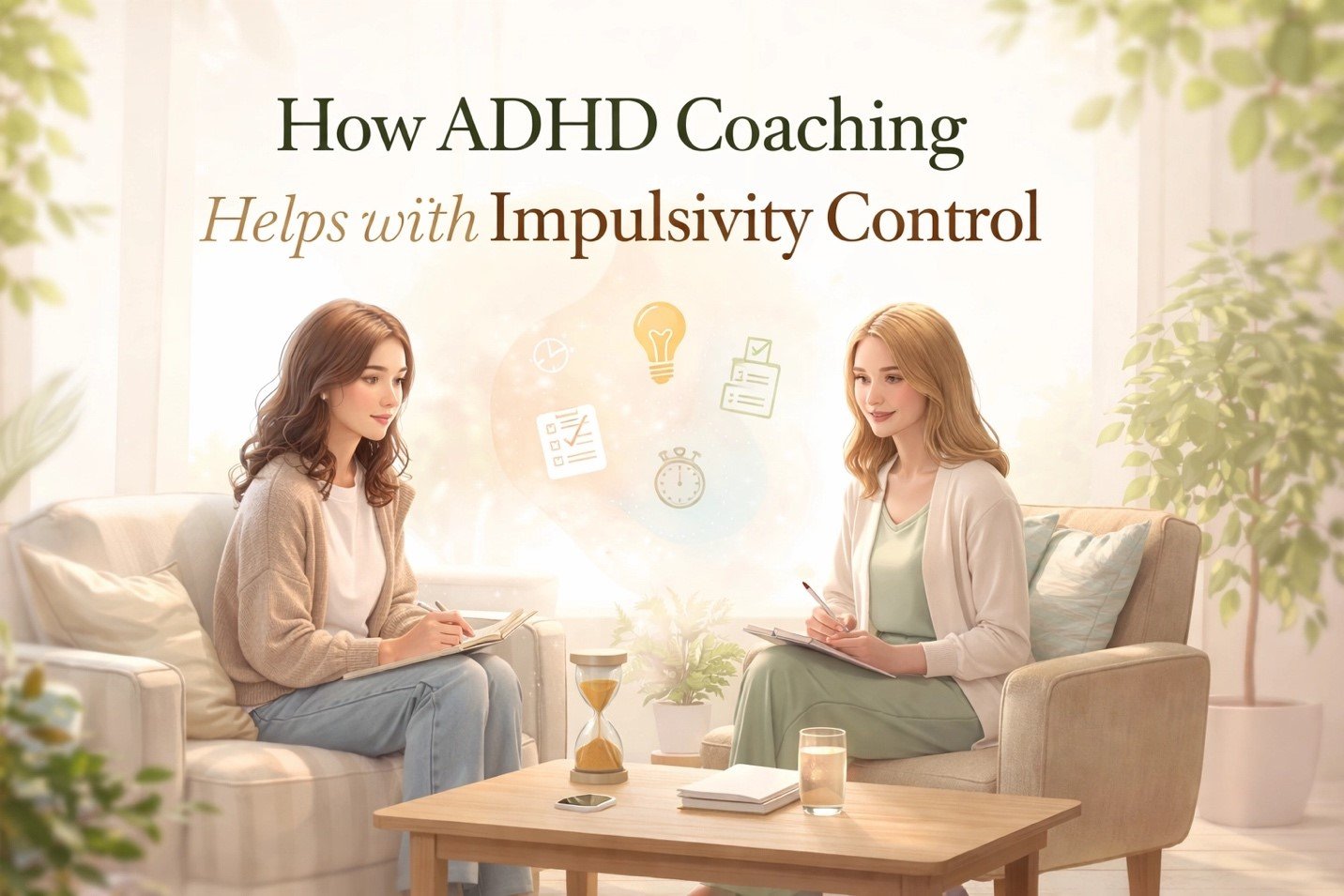
How ADHD Coaching Helps with Impulsivity Control
You know that feeling when you blurt something out in a meeting and immediately regret it? Or when you hit “buy now” on something you didn’t need: again? Maybe you’ve interrupted a friend mid-sentence and felt awful about it later. If you have ADHD, these moments probably feel way too familiar.
Here’s the thing. Impulsivity isn’t a character flaw. It’s not about being rude or careless. It’s actually a core part of how ADHD brains work. And the good news? You can absolutely learn to manage it. That’s where ADHD coaching comes in.
I’ve worked with so many clients across Orange County, Los Angeles, and throughout Southern California who came to me feeling defeated by their impulsive behaviors. They thought something was fundamentally wrong with them. But once we started working together, they realized impulsivity is just a skill gap: not a personality defect. And skills can be learned.
Let me walk you through exactly how ADHD coaching helps with impulsivity control. Because if you’re tired of the guilt spiral after impulsive moments, there’s a way forward.
What Does Impulsivity Actually Look Like with ADHD?
Before we dive into solutions, let’s get real about what we’re dealing with here.
Impulsivity with ADHD shows up in so many ways. It’s not just about being spontaneous or fun-loving (though those can be great qualities!). It’s the stuff that causes problems in your life.
Verbal impulsivity is huge. You interrupt people. You say things without thinking. You might overshare personal information with someone you just met. Later, you replay the conversation and cringe.
Financial impulsivity is another big one. Impulse purchases. Signing up for subscriptions you forget about. That Amazon cart that somehow adds up to $300 when you only needed toothpaste.
Emotional impulsivity means your feelings hit fast and hard. You might snap at your partner over something small. Or send an angry text you wish you could take back. The emotion comes first, the thinking comes later.
Decision impulsivity looks like jumping into things without planning. Quitting a job on a bad day. Starting a new hobby and buying all the gear before you know if you’ll stick with it. Agreeing to plans you don’t actually have time for.

Sound familiar? You’re not alone. I see this every day working with clients here in SoCal. The sunny weather and laid-back vibe might be great, but it doesn’t protect anyone from the real challenges of living with an impulsive ADHD brain.
Why Traditional Advice Doesn’t Work
Here’s what frustrates me. Most advice about impulsivity boils down to “just think before you act” or “count to ten.” If you have ADHD, you’ve probably tried that a thousand times. It doesn’t work: at least not consistently.
That’s because ADHD affects your brain’s executive functions. These are the mental skills that help you pause, plan, and make thoughtful decisions. When those functions aren’t firing the way they should, willpower alone isn’t enough.
It’s like telling someone with poor eyesight to just “try harder to see.” You need the right tools and support. That’s exactly what ADHD coaching provides.
How ADHD Coaching Approaches Impulsivity Differently
ADHD coaching isn’t about lecturing you or making you feel bad about your struggles. It’s about understanding how YOUR brain works and building personalized strategies that actually fit your life.
When I work with someone on impulsivity control, we don’t start with rules and restrictions. We start with curiosity. What triggers your impulsive moments? What needs are you trying to meet? What’s happening in your body and mind right before the impulse takes over?
This approach works because it treats you like the intelligent adult you are. You’re not broken. You just need strategies designed for the way your brain operates.
Building Awareness Without Judgment
The first thing we work on is awareness. Not in a shame-y way: just noticing patterns.
Many of my clients in Los Angeles and Orange County are surprised when they start tracking their impulsive moments. They realize there are specific triggers. Maybe it’s stress at work. Maybe it’s boredom. Maybe it’s that 3pm energy crash.
Once you see the patterns, you can actually do something about them. This is way more effective than just white-knuckling through every situation.

Key Strategies That Actually Help
Let me share some of the specific techniques I use with clients. These are evidence-based approaches that research shows really work for ADHD impulsivity.
Emotional Regulation Techniques
A lot of impulsive behavior comes from emotional overwhelm. When your feelings are intense, your brain wants to DO something immediately. That’s the impulse.
Coaching teaches you to manage those big emotions before they hijack your actions. We use techniques like:
Breathing exercises that actually calm your nervous system. Not the generic “take a deep breath” advice: specific techniques that reduce anxiety and stress in the moment.
Mindfulness practices adapted for ADHD brains. Traditional meditation doesn’t always work for us. But there are modified approaches that help you stay present without feeling like torture.
Body awareness so you can catch the physical signs of an impulse building. Maybe your chest gets tight. Maybe you feel restless. Learning to notice these cues gives you precious seconds to choose a different response.
I’ve seen clients go from constant emotional outbursts to handling stressful situations with real composure. It takes practice, but it absolutely works.
Reinforcement and Self-Regulation
Here’s something cool from the research. Reinforcement strategies are especially effective for improving self-regulation in people with ADHD. In fact, using the right reinforcement can bring your inhibitory control up to the same level as people without ADHD.
What does this mean in practice? We build reward systems that motivate your brain to practice pause-and-think responses. ADHD brains are wired to chase immediate rewards. So we work WITH that wiring instead of against it.
This might look like celebrating small wins when you resist an impulse. Or setting up specific rewards for hitting goals. It sounds simple, but the science backs it up.
Executive Function Development
Impulsivity often gets worse when life feels chaotic. If you’re overwhelmed, running late, or juggling too much, your brain has no capacity left for thoughtful decision-making.
That’s why building executive function skills is such a big part of impulsivity work. We focus on:
Planning and prioritization so you’re not constantly in reactive mode. When you have a clear plan, there’s less room for impulsive detours.
Time management that actually works for ADHD brains. This reduces the stress and rushing that trigger impulsive decisions.
Breaking tasks into manageable steps so you don’t get overwhelmed and reach for quick fixes or distractions.

Real-Life Applications
Let me give you some examples of how this looks in everyday life.
At Work
One of my clients in Irvine kept interrupting in meetings. She knew it annoyed her colleagues, but she couldn’t seem to stop. In coaching, we identified that she was terrified of forgetting her ideas. The impulse to interrupt was actually an attempt to capture her thoughts before they disappeared.
Our solution? She started keeping a small notebook in meetings. When an idea popped up, she’d jot it down instead of blurting it out. This gave her brain the reassurance that the thought was captured. The interrupting decreased dramatically.
We also worked on emotional regulation skills so she could tolerate the discomfort of waiting her turn. It took a few weeks, but her relationships at work improved significantly.
In Relationships
Another client struggled with reactive communication with his partner. Small disagreements would escalate because he’d say hurtful things in the heat of the moment.
We built a “pause protocol” together. When he felt the heat rising, he had permission to say “I need five minutes” and step away. During that time, he’d use specific calming techniques we’d practiced. Then he’d return to the conversation with a clearer head.
His partner was skeptical at first. But after seeing consistent change, she became his biggest supporter. Their relationship transformed.
With Money
Financial impulsivity is so common among my Southern California clients. The cost of living here is already high: impulsive spending makes it even harder.
Coaching helped one client set up systems that created friction between impulse and action. She deleted shopping apps from her phone. She implemented a 48-hour rule for non-essential purchases. She also identified that stress was her main spending trigger and learned healthier ways to cope.
These weren’t restrictions I forced on her. They were solutions we developed together based on her specific patterns and needs.
Why Coaching Works When Other Things Haven’t
You might be wondering what makes ADHD coaching different from just reading about strategies online or trying harder on your own.
The answer is personalization and accountability.
Generic advice doesn’t account for YOUR brain, YOUR life, YOUR triggers. A coach works with you to figure out what actually fits. We adjust strategies when something isn’t working. We troubleshoot in real-time.

Plus, having someone in your corner makes a huge difference. Knowing you’ll check in with your coach creates healthy accountability. You’re not alone in this work.
Research shows that consistent support and encouragement help people with ADHD build greater emotional control over time. That’s exactly what the coaching relationship provides.
If you’ve tried managing impulsivity on your own and felt frustrated, it’s not because you’re incapable. It’s because you were trying to do something hard without the right support.
You Deserve Support That Actually Works
Living with impulsivity can feel exhausting. The regret. The damaged relationships. The constant feeling of being out of control. But it doesn’t have to stay this way.
ADHD coaching gives you concrete tools and personalized strategies that work WITH your brain. You learn to pause before reacting. You build systems that reduce chaos and overwhelm. You develop the emotional regulation skills that make thoughtful responses possible.
I’ve seen incredible transformations in clients throughout Los Angeles, Orange County, and across Southern California. People who thought they’d always struggle with impulsivity now feel confident and in control.
If you’re ready to stop the cycle of impulse and regret, Heal and Thrive Psychotherapy and Coaching is here to help. We offer ADHD coaching designed specifically for adults who want practical, real-world strategies that actually stick.
Reach out today to learn more about how we can work together. You deserve support that understands your brain and helps you build the life you want. Let’s make it happen.