

How do I create a weekly plan that survives ADHD chaos?
I still remember the week my calendar felt like a stranger’s diary. (Yes , that week.) I’d bought an ADHD weekly planner that promised order, color-coded boxes, and a “life-changing” layout. By Tuesday the stickers were in a pile, I’d missed a meeting, and my lunch was mysteriously two hours late. Sound familiar? If so, you’re in the right place.
I’m an ADHD coach who has helped hundreds of people turn that exact chaos into a plan they actually use. Not a shiny plan that dies on a desk , an ADHD-friendly plan that survives the fog of time-blindness, the tug of shifting motivation, and the executive-function hurdles that make simple tasks feel like climbing a mountain.
This article isn’t about forcing you into a rigid schedule. It’s about building a weekly plan that works for ADHD brains: flexible, simple, visible, and forgiving. You’ll get real examples from anonymized clients, step-by-step methods I use with people who live with ADHD, and practical fixes when plans fall apart (because they will , and that’s okay).
Why Most Weekly Plans Collapse Under ADHD Chaos
If you’ve ever created a beautifully structured weekly plan on Sunday… only to watch it fall apart by Tuesday afternoon, you’re not alone. And you’re not broken. Traditional planning systems were simply never designed for ADHD brains. In fact, most of them quietly assume that you can estimate time accurately, manage emotional spikes, remember priorities, and stay consistent without external dopamine support. (Yeah… no.)
Let me walk you through the five biggest ADHD-specific barriers that make “normal” weekly planning nearly impossible , and why the solution isn’t more discipline, but more neuro-friendly structure.

- Time Blindness & the Myth of Accurate Estimation
Most of my clients tell me the same thing:
“I thought the task would take 10 minutes.”
And then… 90 minutes disappear like they fell into a black hole.
ADHD disrupts time-sensing mechanisms. We don’t feel time passing. This makes weekly planning extremely difficult unless the plan includes visual, external cues , not just words on a page.
This is why I often say:
A weekly plan isn’t a map , it’s a lighthouse.
It must guide you, not expect you to steer perfectly.
- Motivation, Dopamine, and the “I’ll Do It Later” Trap
Here’s something research consistently shows:
ADHD isn’t a lack of motivation — it’s inconsistent dopamine availability.
Tasks that are boring, repetitive, or unclear?
Dopamine drops → task avoidance spikes → your weekly plan collapses.
Tasks that are rewarding, clear, or novel?
Dopamine rises → execution becomes easier.
If your weekly plan doesn’t include built-in dopamine anchors (small rewards, novelty, variation, visible progress), it’s almost guaranteed to fail.
- Executive Function Barriers — The Core of the Chaos
Every part of weekly planning requires executive functioning:
- prioritizing
- planning
- sequencing tasks
- organizing steps
- deciding where to start
- shifting between tasks
But ADHD brains often struggle with all of the above. This isn’t laziness , it’s neurological. Without scaffolding, even the simplest plan becomes overwhelming.
One client once told me:
“It’s like I can see the plan. I just can’t start it.”
Exactly.
And that’s why ADHD-friendly plans must reduce cognitive load, not increase it.
- Perfectionism & Emotional Dysregulation
People don’t always associate ADHD with perfectionism , but it’s extremely common. When your plan isn’t perfect, when your timing slips, or when you miss a task, emotional dysregulation kicks in:
“I messed up.”
“I ruined the plan.”
“I’ll start again next week.”
And then? The cycle restarts.
An ADHD-friendly weekly plan must be forgiving, not flawless.
- The Rigidity vs. Chaos Cycle
This is one of the patterns I see most often:
- You feel out of control → you create a super rigid plan
- The plan collapses → everything falls apart
- You feel ashamed → you avoid planning
- Chaos builds → you try to over-structure again Repeat.
This cycle destroys consistency, confidence, and productivity.
What we need instead is a flexible structure , firm enough to guide you, soft enough to bend without breaking.
Real Client Examples, Weekly Plans That Survived ADHD Chaos
Before I walk you through step-by-step strategies, let me show you how real people with ADHD turned chaotic weeks into something they could actually manage. These stories are anonymized, but the challenges , and the transformations , are absolutely real.
I’m sharing three different clients because ADHD shows up differently for everyone. One struggled with motivation, one with time blindness, and one with emotional overwhelm. Yet all three created weekly plans that worked , not perfectly, but consistently enough to feel life-changing.
Client Story #1: “Alex” — The Time-Blind Tech Professional
Alex worked in a fast-paced tech job in California. Brilliant, creative, and chronically late for… everything. His weekly plans used to look like architectural blueprints , detailed to the point of paralysis.
His main struggle?
Time blindness + task underestimation.
During our sessions, he told me:
“I don’t know why everything takes longer than I think. I’m not trying to mess up.”
So we rebuilt his weekly plan using ADHD-friendly tools:
- We broke tasks into micro-blocks (15–25 minutes each).
- We used time buffers between every task.
- We moved his priority tasks to “high-focus hours” , mornings for him.
- We added visual time cues: a wall schedule board and a visual countdown timer.
Three weeks later, he said something unforgettable:
“For the first time, my week feels predictable instead of punishing.”
His plan didn’t become rigid , it became realistic.
And that’s why it worked.
Client Story #2: “Maria” — The Busy Parent Caught in the Dopamine Freeze
Maria was a full-time working mom with ADHD and two kids. Her biggest barrier wasn’t planning , it was doing. Every week she’d write her schedule enthusiastically… and then freeze when it was time to take action.
Her struggle?
Low dopamine + unclear task sequences.
To rebuild her weekly plan, we used dopamine-supporting strategies:
- We added starter steps for every task (“Open laptop,” “Put shoes on,” “Set timer”).
- We inserted micro-rewards: stickers, short breaks, snacks she enjoyed.
- We used a theme-based weekly plan (“Money Monday,” “Task Reset Tuesday,” etc.) to reduce decision fatigue.
- We built a victory log so she could see progress visually.
After five weeks she told me:
“I’m actually finishing things. Not everything , but enough that I don’t feel like I’m drowning.”
Her plan worked because it supported dopamine, not discipline.
Client Story #3: “Jordan” — The Entrepreneur Stuck in the Rigidity–Chaos Cycle
Jordan ran a small business and had an “all or nothing” planning style.
If his schedule wasn’t executed perfectly, he’d declare the whole week ruined and stop planning altogether.
His struggle?
Perfectionism + emotional dysregulation.
For Jordan, the fix wasn’t more structure , it was gentler structure:
- We switched to a 3-priority weekly plan, not a 40-item list.
- We added a Daily Reset Moment: 5 minutes to reevaluate and shift tasks guilt-free.
- We created a Flex Zone on his schedule , 10 hours each week intentionally left open for ADHD chaos.
- We reframed mistakes as “data,” not “failure.”
Eight weeks later he said:
“I finally feel like I can have a bad day without losing the whole week.”
His plan worked because it allowed imperfection.
The Weekly Planning Method That Actually Works
Now that you’ve seen real examples, it’s time to learn the actual method.
This is the ADHD-friendly weekly planning system I teach to clients , the one that works even when motivation crashes, time slips away, or life gets chaotic.
This system has five simple steps, and each step is designed to remove pressure, reduce decision fatigue, and increase dopamine so your brain can actually follow the plan.
Let’s go.
STEP 1 — The Brain Dump (But the ADHD Version)
Most planners tell you to dump “everything in your head” onto paper. That often makes ADHD worse , because the list becomes overwhelming.
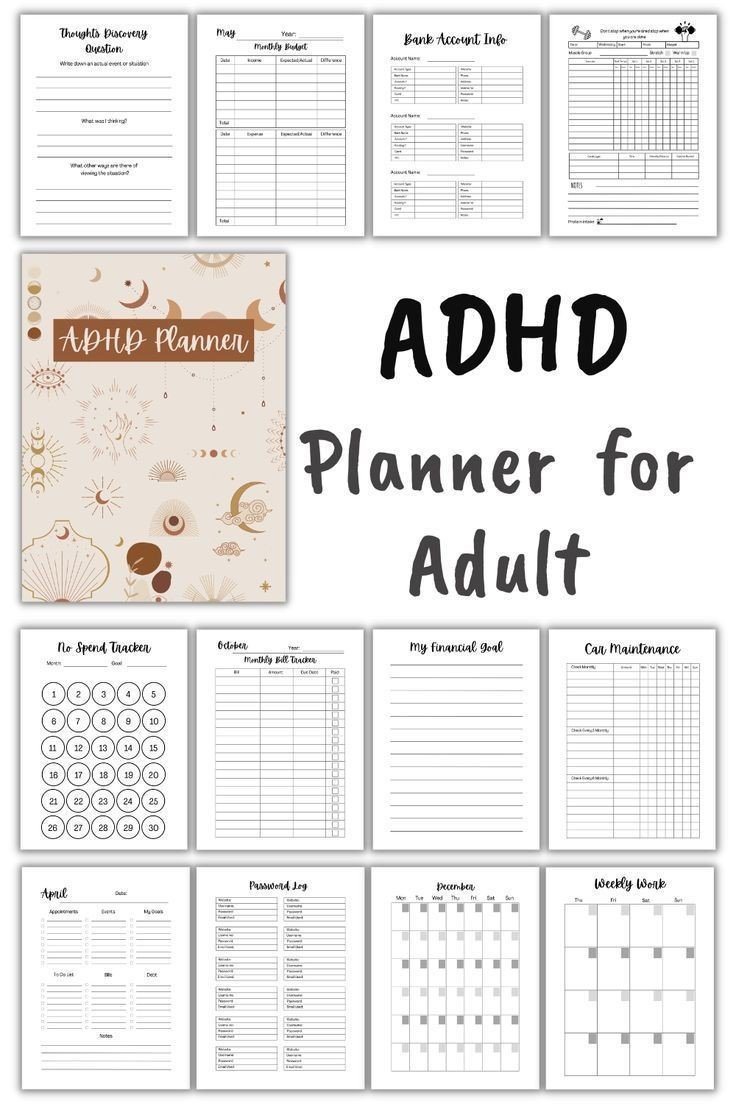
We use a guided brain dump with four boxes:
- Must Do (absolute deadlines, appointments, bills)
- Should Do (important but flexible tasks)
- Want To Do (dopamine tasks, hobbies, self-care)
- Avoiding / Dreading (tasks you procrastinate the most)
The fourth box is essential.
Whatever you avoid the hardest is usually the task that needs the most structure, breaking down, or dopamine support.
STEP 2 — The “Pick 3” Weekly Priorities
Forget 20 goals.
Forget color-coded perfection.
ADHD planning revolves around three weekly priorities:
- One Life Priority
- One Work/School Priority
- One Personal Growth / Maintenance Priority
That’s it.
If you get these done, your week moves forward , even if everything else is chaos.
This step prevents overwhelm and stops the “all or nothing” cycle.
STEP 3 — Build the Skeleton Week (Not a Full Schedule!)
Traditional planners make you fill every hour.
ADHD brains don’t work like that , too rigid, too much pressure.
Instead, create a Skeleton Week:
- Mark fixed events only: work shifts, classes, appointments.
- Add Focus Zones: 1–3 blocks per day when your brain usually works best.
- Add Recovery Zones: times you typically lose energy (late afternoons for most).
- Add Flex Zone: 5–10 hours weekly for unexpected ADHD chaos.
Your Skeleton Week gives structure without suffocating you.
,
STEP 4 — Plug In Tasks Using ADHD Timing Rules
When we fill your week, we use scientifically-proven ADHD timing principles:
Rule #1: Everything takes 2–3× longer than you think.
So we overestimate time intentionally.
Rule #2: Start with the starter step, not the task.
Example:
“Write report” becomes
→ “Open document + write one sentence”
Rule #3: Insert buffers between tasks.
ADHD transitions are slow , buffers prevent cascading delays.
Rule #4: Prioritize placement over perfection.
Your goal is: “This task has a home.”
Not: “This schedule is flawless.”
STEP 5 — The Daily Reset (5 Minutes Only)
This is the secret ingredient for ADHD success.
Every evening (or morning), ask three questions:
- What actually got done?
- What needs moving?
- What’s the smallest possible step for tomorrow?
The reset is tiny , but it keeps your week alive.
Without it, ADHD plans die after one “bad day.”
Your Week Now Has:
✔ A realistic amount of tasks
✔ Built-in dopamine boosters
✔ Space for chaos
✔ Clear priorities
✔ A system you don’t abandon when things go wrong
Advanced ADHD Tactics , How to Make Your Weekly Plan Survive Motivation Drops, Emotional Storms & Executive Dysfunction
By now, you already have the structure of an ADHD-friendly weekly plan — but structure alone doesn’t guarantee survival. Every ADHD brain hits three major roadblocks that can completely derail a plan:
- Motivation crashes (dopamine drops)
- Emotional dysregulation (stress, shame, overwhelm)
- Executive dysfunction spikes (freeze, avoidance, task paralysis)
If your weekly plan doesn’t account for these, it will break.
So in this section, I’ll walk you through the exact tools I teach my clients , the ones that help a weekly plan actually survive real-life ADHD chaos.
Let’s break it down.
1. Motivation Drops , How to Keep Going When Dopamine Disappears
This section explains why ADHD motivation fluctuates dramatically and how dopamine, not discipline, is the real driver of action. It teaches readers how to redesign their weekly plan so it continues working even during low-motivation days, using neuroscience-based scaffolding.
Strategy A — “Minimum Effort Version” of Every Task
ADHD brains often struggle to start tasks when they feel too big or overwhelming. This strategy teaches you to create a tiny, ultra-simple version of every task so that your brain has an easy entry point. Even the smallest action can trigger enough dopamine to get momentum going.
Strategy B — The Dopamine Sandwich
This technique uses enjoyable activities as motivational fuel. By placing a difficult task between two pleasurable ones, you trick your brain into approaching the hard task with less resistance because it anticipates positive reward on both sides.
Strategy C — “5-Minute Activation Rule”
ADHD task initiation is the real challenge, not the task itself. This rule removes the pressure to “finish” and focuses only on starting. In most cases, beginning for just 5 minutes lowers the mental barrier enough that people naturally continue.
2. Emotional Dysregulation , When Stress, Shame, or Overwhelm Break the Plan
This section discusses how emotions in ADHD are fast, intense, and often destabilizing. When a strong emotion hits, the entire weekly plan can collapse unless it includes strategies that help the brain reset, regulate, and return to focus.
Strategy A — The “Reset Moment” Ritual
Instead of spiraling into shame when the day derails, this ritual gives you a structured emotional reset. It helps you detach from guilt, adjust the plan, and get back on track using one tiny, achievable action.
Strategy B — The Self-Compassion Line
ADHD planning often fails because shame blocks motivation. This simple sentence (“This plan serves me , I don’t serve the plan”) reframes the entire system, emphasizing flexibility, reducing emotional load, and preventing all-or-nothing thinking.
Strategy C — Micro-Calm Inserts
These tiny calming breaks regulate the nervous system. Since emotional overwhelm builds silently throughout the day, inserting micro-breaks prevents the system from overloading, and reduces impulsive shutdowns or panic.
3. Executive Dysfunction — When Your Brain Freezes or Avoids Everything
Executive dysfunction is the invisible force behind task paralysis, avoidance, and inability to start, even when you want to. This section gives hands-on techniques that reduce cognitive load, externalize support, and help “unstick” the brain.
Strategy A — The “Body Double Boost”
ADHD brains activate in the presence of others due to increased external structure and accountability. This technique explains how working beside someone else, online or in person, reduces avoidance and increases follow-through.
Strategy B — The Task Deconstruction Ladder
Overwhelm comes from tasks that are too large and undefined. This method teaches you how to break a task into micro-steps so tiny that the brain doesn’t feel threatened. It removes mental friction and makes task initiation almost automatic.
Strategy C — The “One-Decision Week” Method
Decision fatigue exhausts the ADHD brain. This strategy focuses on reducing the number of decisions you must make during the week by locking in one decision across multiple days, saving energy and preventing overwhelm.
4. ADHD Emergency Protocol — When Everything Falls Apart
This section acknowledges that even with perfect planning, some weeks will collapse due to ADHD chaos. Instead of letting the entire week spiral, this protocol gives a structured, compassionate rescue process to stabilize your schedule, your emotions, and your energy.
Step 1 — Stop the Bleeding
Identify the single urgent issue so your brain stops scanning everything at once. This reduces panic and gives a clear starting point.
Step 2 — Declutter the Week
ADHD brains overload quickly. By removing 50% of the week’s tasks, you restore capacity and prevent burnout.
Step 3 — One Micro-Win
The quickest way to recover from ADHD collapse is to create a tiny, achievable success. This small dopamine boost restarts motivation and resets your mental state.

Client Success Stories
- The Architect Who Couldn’t Start Anything
An architect struggled to begin any project. Using the 5-Minute Activation Rule and Task Deconstruction Ladder, they finally started tasks consistently and gained momentum.
- The Entrepreneur Who Lived in Constant Chaos
This entrepreneur had brilliant ideas but zero structure. Applying the One-Decision Week and micro-calming breaks created a predictable schedule and reduced stress.
- The Student Drowning in Shame
The student shut down whenever they fell behind. With the Reset Moment Ritual and Self-Compassion Line, they broke the shame cycle and finished assignments on time.
- The Manager Whose Week Fell Apart
A high-performing manager often lost control due to ADHD chaos. Using the Emergency Protocol, they stabilized workflow even in stressful weeks.
- The Creative Who Could Never Finish Anything
A creative person started projects enthusiastically but never finished. Using the Dopamine Sandwich and Minimum-Effort Versions, they completed a major project for the first time in years.

Why Success Looks Different for ADHD
For many ADHD adults, “success” isn’t finishing every task perfectly. It’s about consistency, momentum, and reduced chaos.
Measuring progress requires looking at behaviors and patterns, not just outcomes.
Key ADHD Weekly Metrics
- Task Initiation Rate
- How often are you starting tasks, even if unfinished?
- Example: “I started 80% of my planned tasks this week.”
- Insight: If you’re starting tasks more consistently, your executive function is improving.
- Plan Adherence
- How closely did your week follow the Skeleton Week or Pick 3 priorities?
- Tip: Even 50% adherence is a win for ADHD brains.
- Emotional Resilience
- Track how often you used Reset Moments or micro-calms.
- Reduced overwhelm = increased skill in emotional regulation.
- Dopamine-Friendly Wins
- Count minimum-effort completions or dopamine sandwich tasks.
- Celebrate these, even if they feel small. They build habit and momentum.
- Chaos Recovery Time
- How quickly did you recover after a derailment or unexpected task?
- Shorter recovery = stronger ADHD coping strategies.
Tools for Measuring Progress
- Digital planners with tagging (e.g., Todoist, Notion)
- Color-coded stickers for physical planners (green = success, yellow = partial, red = missed)
- Weekly reflection prompts (5 minutes every Sunday or Monday)
Why Tracking Matters
- Builds self-awareness
- Reduces shame and self-criticism
- Creates data for adjusting future weeks
- Reinforces executive function skills
Even small, measurable wins create momentum , and momentum is the ADHD superpower.
Take the Next Step Toward ADHD Success
Creating a weekly plan that survives ADHD chaos is possible , but it’s even easier with guidance, tools, and support.
Here’s how you can take action today:
- Contact an ADHD Coach
- Speak with experienced coaches who understand ADHD, executive dysfunction, and planning challenges.
- Personalized sessions ensure strategies actually work for your unique brain.
- Download Your ADHD Weekly Planning Guide
- A complete step-by-step PDF version of everything in this article.
- Includes templates, checklists, and examples for immediate use.
- Book a Session
- Get tailored advice for your schedule, priorities, and challenges.
- Hands-on help ensures your weekly plan is ADHD-proof and sustainable.
Pro Tip:
Even if you start small , with one Pick 3 priority or a 5-minute activation , you’re already building momentum.
Momentum is the real key to thriving with ADHD.
Pingback: